

Our Verdict
Pressure washing is a genuinely effective exterior maintenance tool when matched to the right surfaces and used with proper technique. It saves time compared to hand-scrubbing and can extend the life of painted and sealed surfaces by removing contaminants before they cause lasting damage. However, it demands respect - wrong pressure settings or careless angles can strip paint, force moisture into walls, or etch soft materials.
Homeowners with concrete driveways, brick walkways, or fiber-cement siding will get the most reliable results; those with older wood siding, stucco, or delicate trim should consult a professional or opt for soft washing instead.
What Pressure Washing Actually Does
Pressure washing - sometimes called power washing - forces water through a narrow nozzle at high velocity to dislodge dirt, biological growth like mildew and algae, and surface contaminants. Residential machines typically operate between 1,300 and 2,800 PSI (pounds per square inch), while contractor-grade units can exceed 4,000 PSI.
The key variables aren't just pressure - they're also nozzle angle (measured in degrees; a 0° nozzle concentrates force, while a 40° fan tip disperses it widely), standoff distance (how far the wand is held from the surface), and flow rate (gallons per minute). Understanding these factors determines whether you clean effectively or cause unintended damage.
Pressure washing is a legitimate part of routine home upkeep. It can be a meaningful step before repainting, resealing a deck, or simply keeping driveways from becoming slick with algae. See how it fits into broader upkeep with weekend projects that add long-term home value.
Where Pressure Washing Works Well
Removes mildew, algae, and years of buildup quickly
Biological growth on concrete, siding, and walkways can be removed in a fraction of the time it would take with manual scrubbing, making it efficient for large surface areas.
Prepares surfaces for painting or sealing
Washing away loose material and contaminants gives paint and sealants a cleaner bonding surface, which can meaningfully extend the life of a new coat.
Improves curb appeal without professional help
A clean driveway, walkway, and siding can noticeably refresh a home's appearance, and most homeowners can handle straightforward surfaces themselves.
Reduces slip hazards on outdoor surfaces
Algae and moss on patios and walkways become dangerously slippery when wet; regular pressure washing removes these growth layers before they accumulate.
Extends the lifespan of exterior materials
Removing corrosive contaminants like mold, dirt, and bird droppings before they degrade surface materials can help siding, decking, and driveways last longer.
Concrete driveways, patios, and sidewalks are the strongest candidates for pressure washing. Dense, non-porous concrete tolerates high PSI without surface damage, and results are dramatic - years of embedded grime, oil stains, and algae lift away efficiently. Brick and natural stone pavers also respond well, though mortar joints deserve a wider nozzle and moderate pressure to avoid erosion.
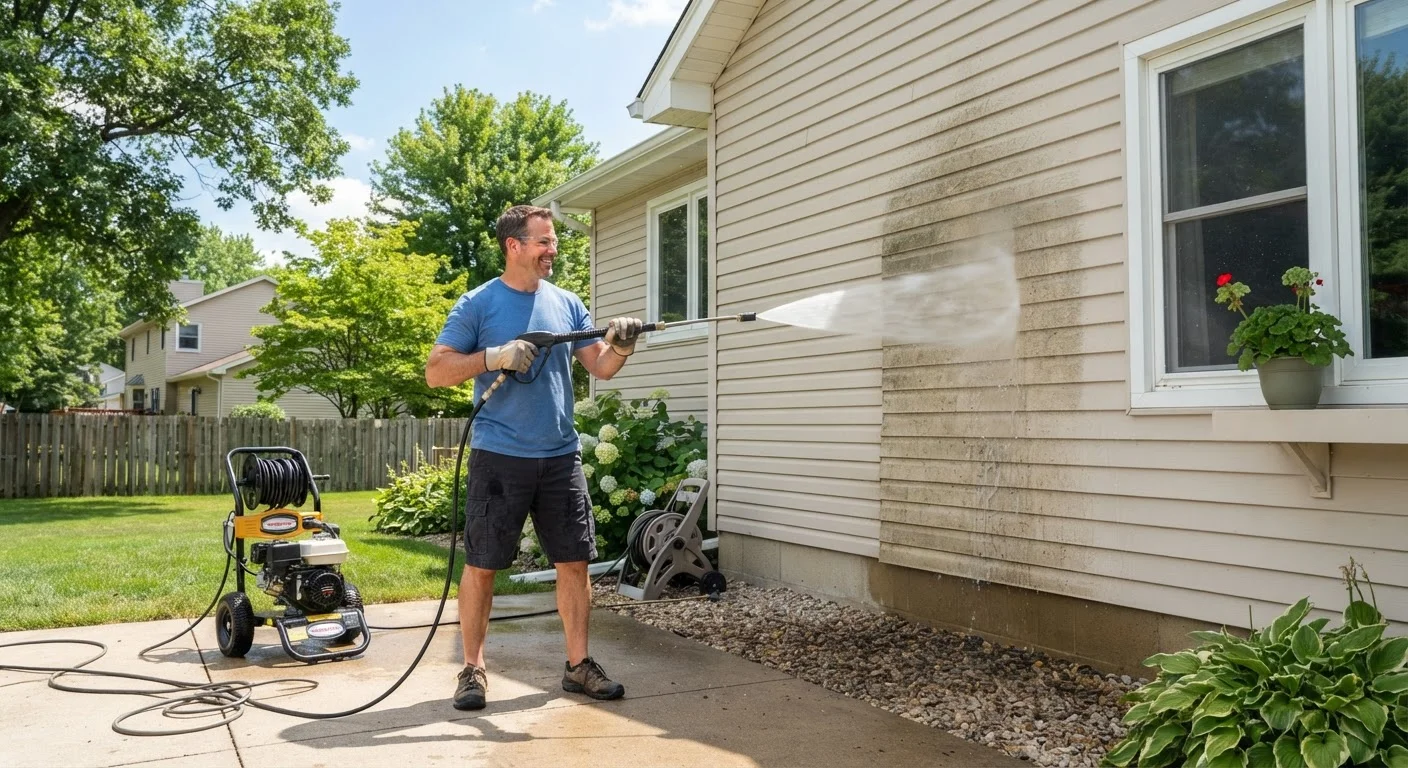
Fiber-cement siding (such as HardiePlank) handles pressure washing reliably when using a 25° or 40° nozzle held at least 12 inches from the surface. Painted metal surfaces - gutters, downspouts - clean up well at lower pressure settings. Vinyl siding can be washed effectively, but only at lower PSI (under 1,500) with a wide-angle nozzle and consistent horizontal strokes that don't force water behind panels.
Where Pressure Washing Falls Short or Causes Damage
Can damage soft or deteriorating surfaces
Wood, stucco, and aged painted surfaces are easily etched, splintered, or stripped by high-pressure water, particularly if a narrow nozzle is used too close to the material.
Risk of forcing water into wall cavities
Directing pressurized water upward at siding or around window frames can breach seals and drive moisture behind the exterior, potentially leading to mold or rot inside walls.
Physical injury risk if used carelessly
The concentrated stream from a pressure washer is powerful enough to cut skin; operating the wand improperly or on a ladder significantly raises the risk of injury.
Can strip paint prematurely
Even paint that appears intact may be close to failure; pressure washing can accelerate peeling and create additional surface prep work before repainting.
Runoff may carry contaminants toward storm drains
Wash water containing mold spores, algae, and cleaning detergents can flow into storm drain systems; some municipalities regulate this, particularly for commercial detergent use.
Older wood siding is particularly vulnerable. High pressure can raise grain, splinter edges, and drive moisture deep into the wood - creating the conditions for rot and mold well after the surface appears dry. If your home has wood siding, a soft-wash approach (low pressure, diluted cleaning solution, gentle rinse) is generally safer. Learn more about caring for wood structures with this upkeep reference for decks, fences, and wood structures.
Stucco presents a similar challenge - it's porous and can crack or pit under concentrated pressure, allowing water to penetrate the wall system. Windows and doors are obvious hazard zones: water forced under frames or around seals can leak into wall cavities.
Soft Washing: A Lower-Risk Alternative
Soft washing uses a low-pressure spray (typically under 500 PSI) combined with biodegradable cleaning solutions to break down organic growth chemically rather than mechanically. It's widely recommended for wood siding, stucco, roofs, and older painted surfaces where direct high-pressure water poses damage risks. Many exterior cleaning professionals offer soft washing as their primary method for these sensitive areas.
Painted surfaces require caution too. Pressure washing can strip paint that's already failing, but it can also hasten peeling on paint that appeared stable. Always inspect the condition of paint and caulk before washing, and be prepared for follow-up repair work. Signs that something is wrong with your home's exterior - like bubbling paint or gaps in caulk - should be addressed before water ever touches them.
Safety, Permits, and When to Call a Pro
Pressure washers produce enough force to cause serious lacerations - never point the wand at people, pets, or yourself. Always wear eye protection and closed-toe footwear. Be especially cautious on ladders: the kickback from a wand can cause loss of balance, so consider a telescoping extension wand for second-story work instead of climbing.
Most exterior pressure washing doesn't require a permit, but a few considerations apply. Some municipalities have restrictions on wastewater runoff - particularly if you're using detergents near storm drains. Check local guidelines before washing driveways that drain to the street.
For multi-story homes, homes with soft or aged siding, or surfaces with existing cracks and deterioration, a licensed exterior cleaning professional is worth the investment. They carry liability insurance, use calibrated equipment, and can identify damage risks before they become expensive repairs. Understanding when DIY crosses into professional territory can help you make that call with confidence.
1,500-2,000 PSI
Safe range for most vinyl and painted siding
Exterior cleaning guidelines commonly recommend staying within this pressure range and using a 25-40° nozzle to avoid surface damage on residential siding.
12+ inches
Minimum recommended standoff distance from siding
Maintaining at least 12 inches between the nozzle tip and the surface significantly reduces the risk of etching, paint stripping, or moisture intrusion.
The content on this site is provided for informational purposes only and should not be considered a substitute for professional advice. While we strive to provide accurate and up-to-date information, we make no guarantees regarding its completeness or accuracy. Always consult a qualified professional for advice specific to your circumstances before making any decisions.