

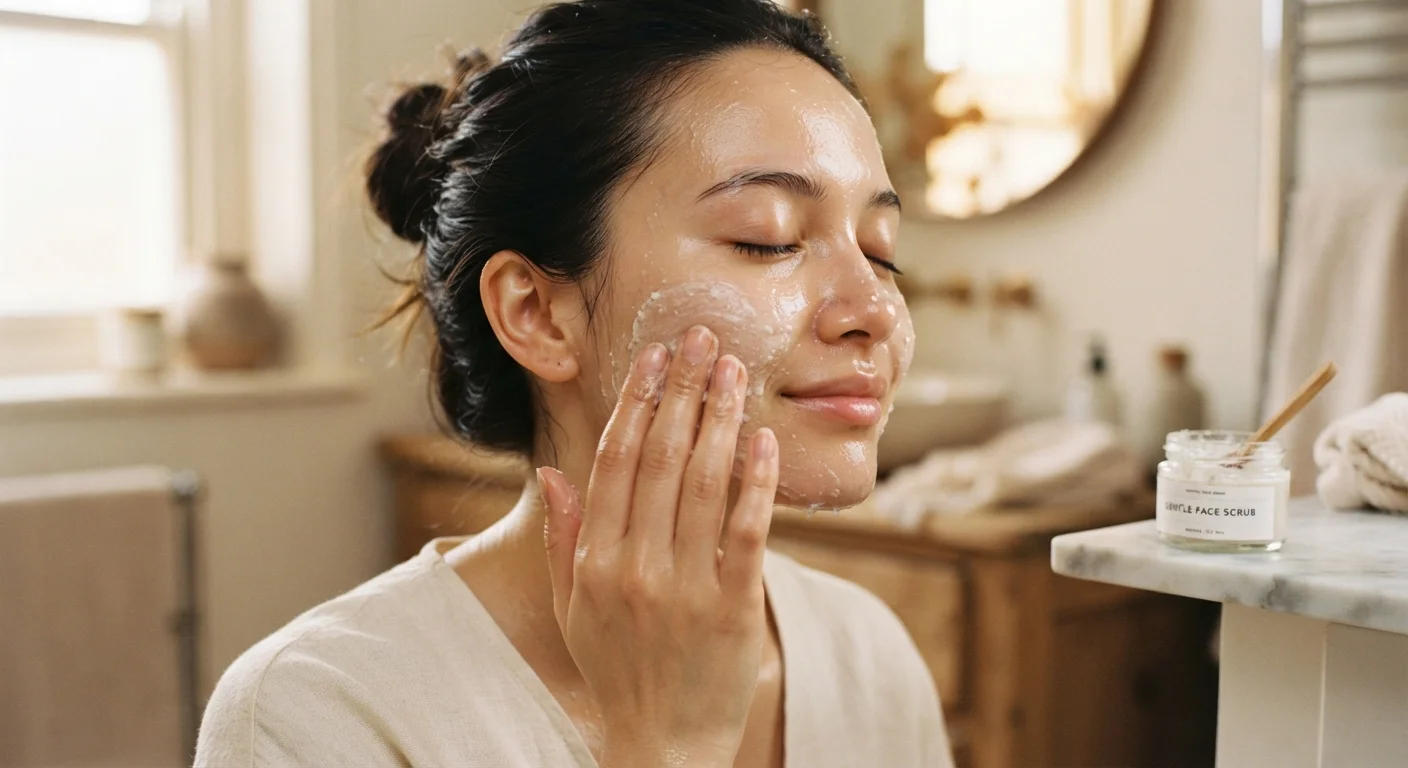
What Exfoliation Actually Does
Your skin naturally sheds dead cells from its outer surface roughly every 28 to 40 days, a process that slows with age. Exfoliation speeds up that turnover by manually or chemically loosening those dead cells, which can otherwise accumulate and leave skin looking dull, feeling rough, or contributing to clogged pores.
There are two main categories: physical exfoliation, which uses texture (scrubs, brushes, or cloths) to physically remove dead cells, and chemical exfoliation, which uses acids or enzymes to dissolve the bonds holding dead cells to the surface. Neither method is universally superior - the right one depends on your skin type and how your skin responds. If you're just building out your skincare routine, see our step-by-step guide to starting a skincare routine for context on where exfoliation fits in.
How Often Should You Exfoliate by Skin Type
Frequency is where most people go wrong. More is not better - over-exfoliating strips the skin's protective barrier, leading to irritation, sensitivity, and paradoxically more oil production in some skin types.
Exfoliate oily or acne-prone skin two to three times per week using a BHA.
Oily skin produces excess sebum that can mix with dead cells and clog pores. BHAs like salicylic acid penetrate the pore lining to help clear buildup. Going beyond three times per week, however, can disrupt the skin barrier and trigger more oil production.
Limit exfoliation for dry or sensitive skin to once per week using a gentle lactic acid or enzyme formula.
Dry and sensitive skin already has a compromised or thinner barrier, making it more vulnerable to irritation. Lactic acid exfoliates gently while also attracting moisture, making it a more skin-compatible option. Enzymes are even milder and less likely to trigger a reaction.
Stick to one to two exfoliation sessions per week for normal or combination skin.
Normal and combination skin can tolerate moderate exfoliation, but daily use still risks cumulative barrier damage over time. Alternating between an AHA and BHA based on specific concerns - dullness versus pore congestion - can be more effective than using one product more frequently.
Always apply SPF on days when you exfoliate with chemical acids.
Chemical exfoliants, particularly AHAs, increase the skin's photosensitivity by removing protective dead cells that partially shield the skin from UV exposure. Without sunscreen, freshly exfoliated skin is more prone to sun damage, hyperpigmentation, and premature aging.
Avoid combining multiple exfoliating actives in the same routine.
Layering an AHA, a BHA, and a physical scrub in a single session creates cumulative irritation far beyond what each would cause individually. This is one of the fastest routes to a damaged skin barrier. Simplicity and consistency outperform intensity.
Understanding whether your concerns stem from your inherent skin type or a temporary condition also shapes how you exfoliate. Our article on how skin type differs from skin condition explains why this distinction matters.
Choosing the Right Method
Once you know how often to exfoliate, matching the method to your skin type prevents unnecessary damage.
28-40 days
Natural skin cell turnover cycle
Dermatologists generally note that the skin's natural desquamation (shedding) cycle ranges from roughly 28 to 40 days, with the process slowing as we age.
1-3x/week
Recommended maximum exfoliation frequency
Most dermatological guidance suggests limiting exfoliation to one to three sessions per week for the majority of skin types to avoid barrier disruption.
Chemical exfoliants break down into a few key types. Alpha hydroxy acids (AHAs) - such as glycolic and lactic acid - work on the skin's surface and suit dry or dull skin well. Beta hydroxy acids (BHAs), like salicylic acid, are oil-soluble and penetrate pores, making them effective for oily or acne-prone skin. Enzyme exfoliants (often derived from papaya or pineapple) offer a very gentle option for sensitive skin.
Physical exfoliants can be effective if used gently, but coarse scrubs with irregular particles can cause micro-tears. If you prefer a physical method, use a soft washcloth or a finely-milled scrub with light pressure - never scrub aggressively.
Patch Test New Exfoliants First
Before applying a new chemical exfoliant to your full face, apply a small amount to a discreet area - such as the jawline or inner arm - and wait 24 hours. This simple step can help you identify sensitivity before it becomes a larger reaction. New-to-acids users should also start with lower concentrations and build up gradually rather than jumping straight to higher-strength formulas.
After exfoliating, always follow with a moisturizer to support barrier recovery. If you're unsure how your exfoliant fits into your full routine, our guide to layering skincare products in the right order will help you sequence everything properly.
Recognizing and Recovering from Over-Exfoliation
Over-exfoliation is more common than most people realize, and its symptoms are often mistaken for other skin problems. Persistent redness, a tight or stinging sensation after cleansing, increased breakouts, flaking that doesn't respond to moisturizer, or a shiny but rough texture are all warning signs.
If you notice these signs, pause all exfoliation entirely - typically for one to two weeks - and focus on gentle cleansing and barrier-supporting moisturizers. Reintroduce exfoliation slowly, starting with the mildest option and lowest frequency. If your routine has stopped working as expected or your skin seems less responsive than it once did, learn why your skincare routine may have lost effectiveness - over-exfoliation is one of the most common culprits.
This article is for general informational purposes only and does not constitute medical or dermatological advice. If you have a skin condition or persistent concerns, consult a licensed dermatologist or healthcare professional.
The content on this site is provided for informational purposes only and should not be considered a substitute for professional advice. While we strive to provide accurate and up-to-date information, we make no guarantees regarding its completeness or accuracy. Always consult a qualified professional for advice specific to your circumstances before making any decisions.