

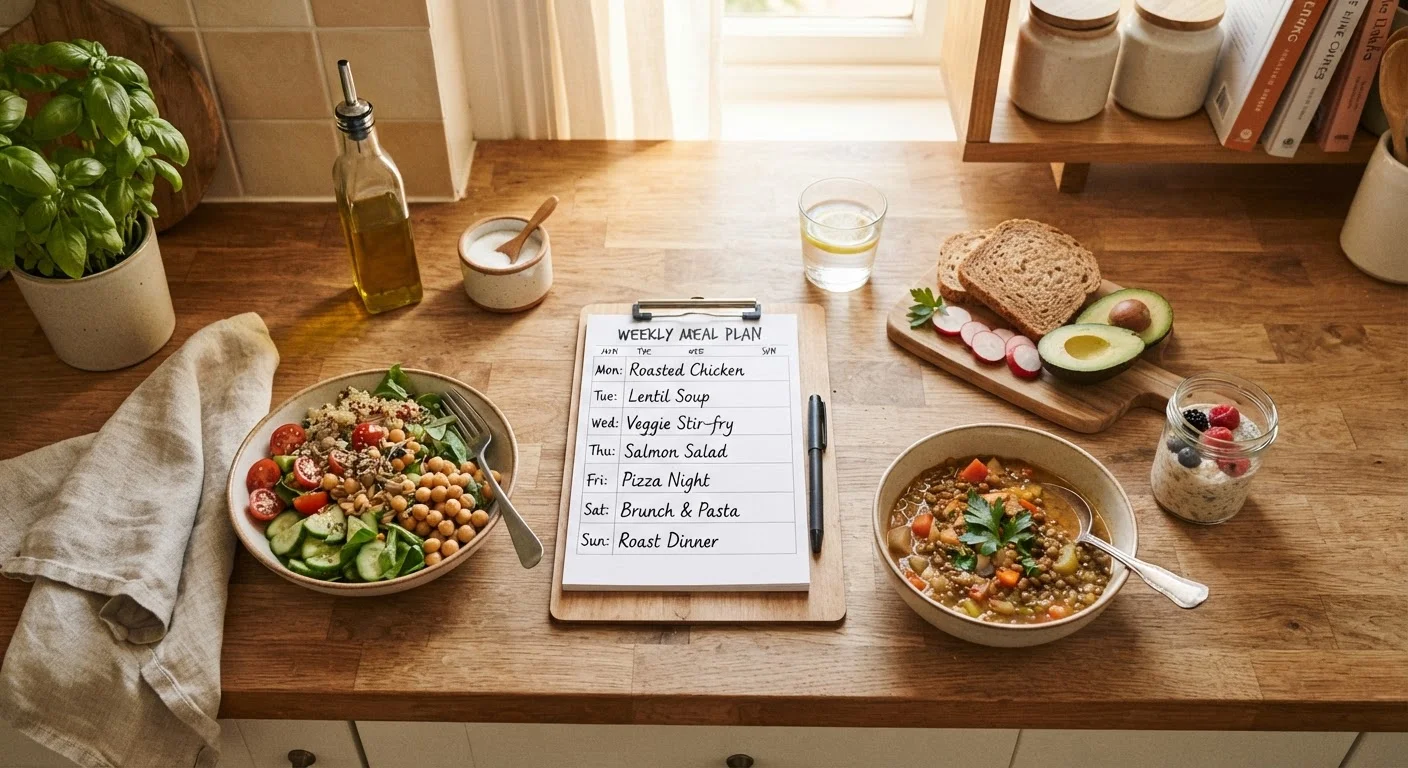
Why Most Meal Plans Fall Apart by Wednesday
Most people approach weekly meal planning by filling every slot with a different recipe. Monday's pasta, Tuesday's tacos, Wednesday's salmon - it sounds organized on paper. But by mid-week, when you're tired and short on time, all that variety becomes a liability. You're searching for a recipe you've never made, realizing you're missing two ingredients, and ultimately ordering takeout instead.
The problem isn't lack of intention - it's that the plan has no structural backbone. Every meal requires the same level of decision-making and effort, which is unsustainable when real life kicks in. This is exactly the gap that anchor meals are designed to fill. For a broader look at setting up a plan that actually holds, see this practical primer on meal planning from scratch.
What Makes a Good Anchor Meal
Not every recipe qualifies as an anchor meal. The right candidates share a few key characteristics:
- Familiar enough to cook on autopilot. You shouldn't need to re-read the recipe. It's a dish you've made enough times that the process is second nature.
- Uses pantry-staple or easy-to-stock ingredients. If you're always hunting for a specialty ingredient, it won't hold up as a weekly anchor.
- Flexible enough to vary slightly. A sheet-pan chicken that works with whatever vegetables are on hand is far more durable than a dish with an exact, non-negotiable ingredient list.
- Accepted by your household. It doesn't have to be anyone's favorite meal - it just can't be something people resist eating.
Common examples include bean-based soups, egg dishes like frittatas, simple grain bowls, pasta with a go-to sauce, or any protein-plus-vegetable combination you've made reliably for months.
A working parent makes a big pot of lentil soup every Sunday evening. It serves as Monday's dinner and Tuesday's lunch, requiring zero planning those days.
A couple designates Friday nights as 'sheet-pan night,' rotating the protein and vegetables based on what's in the fridge.
A single professional always eats scrambled eggs with toast and fruit on weekday mornings, without variation.
A family of four has 'taco Tuesday' as a standing weekly meal, using ground turkey or beans depending on the week.
How to Build Your Week Around Anchor Meals
The process is straightforward. Start by identifying two to three meals that fit the criteria above - dishes already in your rotation that require minimal thought. Place these into your weekly calendar first, on the days most likely to be busy or unpredictable.
Then, if you want to try a new recipe or cook something more involved, fit it into the remaining open slots. This reframes meal planning: instead of planning everything with equal effort, you're only actively planning the non-anchor meals. The anchors are already decided.
Start With One Anchor, Not Four
If you're new to this approach, resist the urge to restructure your entire week at once. Pick one meal slot - the one that stresses you most on a typical week - and commit to anchoring it for three weeks straight. Once that feels automatic, add a second anchor. Building gradually is more sustainable than overhauling everything at once.
This approach also simplifies your grocery list significantly. Because anchor meals use consistent ingredients, a portion of your shopping list practically writes itself each week. You're only thinking carefully about the ingredients for new or varied meals.
If your schedule shifts unpredictably week to week, anchoring your most hectic evenings is especially useful. The article on building meal plans for unpredictable weeks covers complementary strategies for when even a partially structured plan needs room to flex.
The Real Benefit: Lower Mental Load, Consistently
The primary value of anchor meals isn't nutritional or financial - it's cognitive. Every meal decision you eliminate from your weekly planning cycle is a small amount of mental energy returned to you. Over the course of a month, that adds up meaningfully.
68%
Adults who say weeknight dinners feel stressful
A survey by the American Psychological Association found that a majority of adults report mealtime decision-making contributes to daily stress, particularly on weeknights.
~35,000
Decisions the average adult makes daily
Research in decision science suggests adults make tens of thousands of choices each day, and reducing even a small cluster of low-stakes decisions can meaningfully preserve cognitive capacity.
Meal planning has well-documented effects beyond dinner itself. As explored in this look at how meal planning affects more than dinnertime, consistent structure around food can reduce both grocery spending and weeknight stress - two outcomes that compound when anchor meals make the system more maintainable long-term.
The goal isn't to eat the same thing forever. It's to stop spending energy on low-stakes decisions so that cooking, when you do choose to be creative, feels like a pleasure rather than another task on the list. For a complete step-by-step framework, the weekly meal planning playbook walks through every stage from calendar to fridge.
Frequently Asked Questions
Most households find two to four anchor meals per week is a practical sweet spot. Too few and you're still planning everything from scratch; too many and your diet can feel monotonous. Start with two and adjust based on your schedule and preferences.
Not at all. An anchor meal can be any eating occasion - a weekday breakfast rotation, a reliable packed lunch, or a simple Friday dinner. Choose the meals where decision fatigue hits you hardest and anchor those first.
Anchor meals work best when they're nutritionally balanced enough to repeat regularly, but they don't need to be diet foods. A simple chicken and vegetable stir-fry or a bean soup can be both comforting and nourishing. Focus on meals you genuinely enjoy and that make you feel good.
Small variations keep anchor meals fresh. If roasted chicken is an anchor, rotate the seasoning or the side vegetable each time. The dish's core structure stays the same, making prep predictable, while slight tweaks maintain interest.
Think back to the last two or three weeks and identify which dinner you made more than once without much friction. That's a strong candidate. It should be something you already buy ingredients for regularly and that your household reliably eats.
They're related but different. Meal prep is about batch-cooking food in advance. Anchor meals are a planning concept - choosing which meals to repeat and rely on. Some anchor meals benefit from prep, but many are simply quick dishes you know well enough to cook without planning effort.
The content on this site is provided for informational purposes only and should not be considered a substitute for professional advice. While we strive to provide accurate and up-to-date information, we make no guarantees regarding its completeness or accuracy. Always consult a qualified professional for advice specific to your circumstances before making any decisions.