

Our Verdict
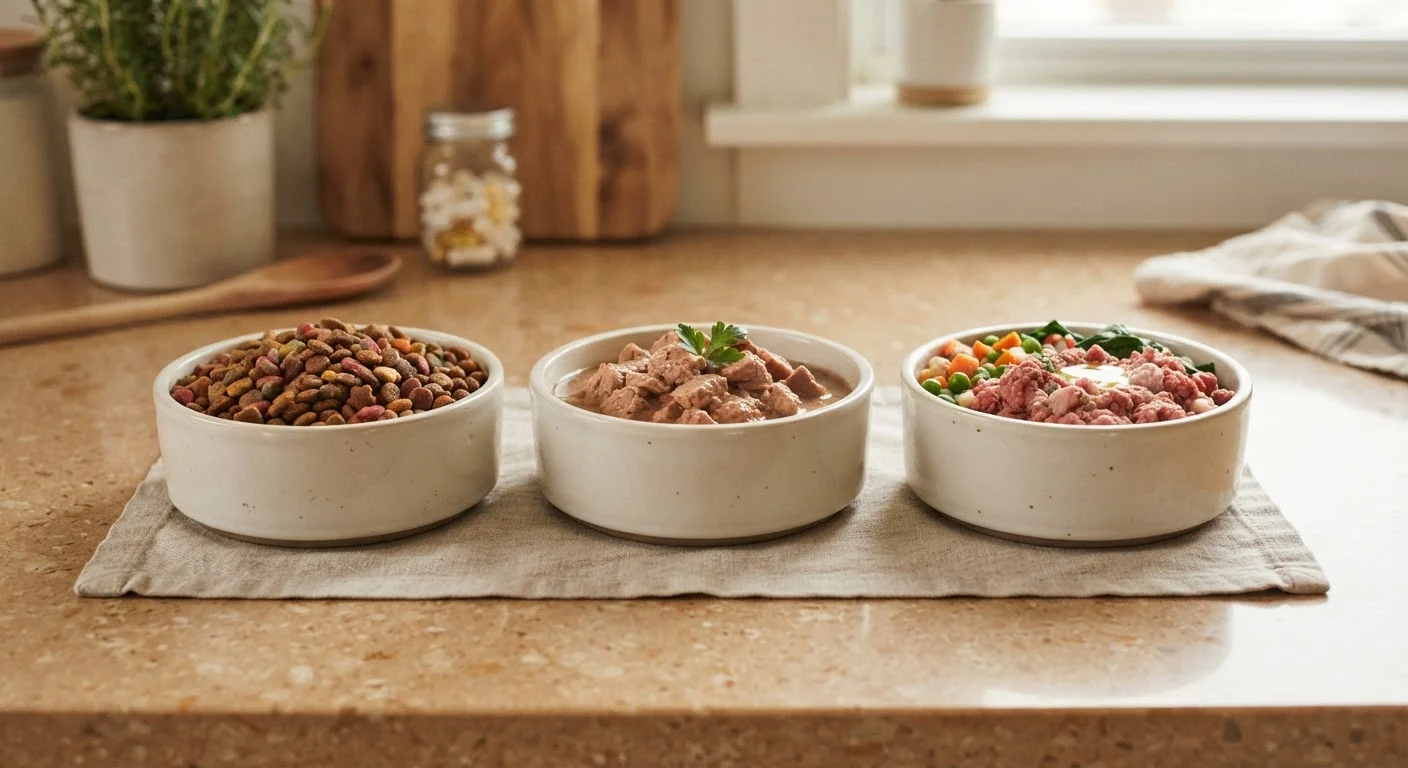
Each feeding approach has genuine nutritional strengths and real-world trade-offs. Wet food tends to offer the best hydration and palatability for most cats, while dry food is more practical and shelf-stable. Raw diets can align closely with a cat's ancestral biology but introduce food-safety considerations that owners must manage seriously. Most cats do well on a thoughtfully chosen diet tailored to their life stage and health status.
| Best for | Recommended |
|---|---|
| Cats prone to urinary issues or low water intake | Wet food |
| Busy households prioritizing convenience and cost | Dry food |
| Owners willing to invest significant time and research | Raw diet |
| Most adult cats as a general balanced approach | Mixed wet and dry feeding |
What Cats Actually Need to Eat
Unlike dogs or humans, cats are obligate carnivores - meaning animal tissue isn't just preferred, it's biologically necessary. Cats cannot synthesize certain nutrients on their own and must obtain them directly from animal-based food sources. The most well-known example is taurine, an amino acid essential for heart function, vision, and reproduction that is found almost exclusively in animal flesh. A taurine deficiency can cause dilated cardiomyopathy and blindness.
Cats also require arachidonic acid (an omega-6 fatty acid), preformed vitamin A (they cannot convert beta-carotene), and adequate dietary protein to support organ function and muscle maintenance throughout their lives. Any feeding approach - dry, wet, or raw - must meet these fundamental requirements to be considered nutritionally complete. In the United States, the Association of American Feed Control Officials (AAFCO) sets nutrient profiles that commercial cat foods use as a benchmark. Look for an AAFCO nutritional adequacy statement on any food you choose.
For more on how hydration intersects with nutrition broadly, see the overlooked role water plays in nutrition. The same principles of moisture and nutrient absorption are directly relevant to your cat's daily diet.
Dry Food: Convenience With Caveats
Dry kibble is the most widely fed cat food in American households, largely because it's affordable, easy to store, and can be left out without spoiling. From a nutritional standpoint, high-quality dry foods can meet AAFCO requirements for complete and balanced nutrition.
The primary limitation of dry food is moisture content. Kibble typically contains only 6-10% water, compared to a cat's natural prey diet which is roughly 70% moisture. Cats evolved in arid environments and have a naturally low thirst drive, meaning they often don't compensate adequately by drinking from a water bowl. Over time, chronically low water intake has been associated with an increased risk of urinary tract disease and kidney problems in cats.
Carbohydrate content is another consideration. Cats have limited ability to digest large amounts of carbohydrates, and many dry formulas use starchy ingredients as binding agents. This doesn't automatically make dry food harmful, but it's worth comparing ingredient lists and protein percentages when evaluating options.
| Dry Food | Wet Food | Raw Diet | |
|---|---|---|---|
| Moisture content | 6-10% | 70-80% | 60-75% (varies) |
| Protein level | Moderate to high | High | High |
| Carbohydrate level | Moderate to high | Low to moderate | Very low |
| Food safety risk | Low | Low (if stored correctly) | Higher - bacterial pathogens possible |
| Nutritional completeness | Reliable if AAFCO-compliant | Reliable if AAFCO-compliant | Varies; homemade often incomplete |
| Convenience | Very high | Moderate | Low - requires preparation |
| Relative cost | Generally lower | Moderate to higher | Variable; often higher |
Wet Food: Hydration and Palatability
Canned or pouch wet food contains roughly 70-80% moisture, closely mirroring the water content of whole prey. This makes it particularly valuable for cats with kidney disease, urinary crystals, or a history of lower urinary tract issues. Increased dietary moisture supports kidney filtration and dilutes urine, reducing the concentration of minerals that form crystals or stones.
Wet food also tends to be higher in protein and lower in carbohydrates than many dry formulas, which aligns more closely with a cat's natural macronutrient needs. Many cats find it more palatable, which is especially helpful for older cats or those recovering from illness.
The practical downsides are cost (wet food is generally more expensive per calorie) and spoilage - opened cans must be refrigerated and used within 24-48 hours. For cats who graze throughout the day, leaving wet food out at room temperature for more than a couple of hours poses a bacterial contamination risk.
Feeding a mix of wet and dry food is a common approach that balances hydration benefits with cost and convenience. Your cat's specific health status should guide how much weight you give each factor - a topic worth discussing at your next routine veterinary visit.
Encourage Water Intake Alongside Dry Food
If dry food is your primary choice, consider a cat water fountain - many cats prefer moving water and drink more consistently from a circulating source. Placing multiple water stations around the home can also help. Adding a small amount of wet food even a few times per week provides a meaningful hydration boost without a full diet overhaul.
Raw Diets: Potential Benefits and Real Risks
Raw feeding - typically a combination of uncooked muscle meat, organs, and bone - appeals to owners who want to align their cat's diet with ancestral biology. Proponents argue that raw diets are more digestible, produce firmer stools, and support coat quality. Some of these observations are plausible given the high protein and moisture content of most raw preparations, though large-scale controlled research comparing raw to commercial diets in cats remains limited.
The most significant concerns with raw diets are food safety and nutritional completeness. Raw meat - including chicken, beef, and fish - can harbor Salmonella, Listeria, and E. coli. These pathogens pose a risk not only to cats but also to humans handling the food, particularly children, the elderly, and immunocompromised individuals. The American Veterinary Medical Association (AVMA) has published a position discouraging raw or undercooked animal-source proteins in pet diets due to these risks.
Homemade raw diets are also notoriously difficult to balance correctly without expert guidance. Deficiencies in calcium, phosphorus, or key vitamins can develop over time with serious health consequences. If you're considering a raw diet, work with a board-certified veterinary nutritionist to develop a properly formulated recipe or evaluate commercial raw options that carry an AAFCO adequacy statement.
Raw Diet Risks Go Beyond Your Cat
Handling raw meat for pet food carries the same food-safety precautions as handling it for human meals - and then some, since cats can shed bacteria in their saliva and feces after consuming contaminated meat. Wash hands, prep surfaces, and utensils thoroughly after every feeding. Households with young children, pregnant individuals, or immunocompromised members should discuss raw feeding risks carefully with both a veterinarian and a healthcare provider.
Making a Practical Decision for Your Cat
There is no universally correct answer to the dry-vs.-wet-vs.-raw question. The right choice depends on your cat's age, health history, activity level, and household context. A young, healthy cat with no prior urinary issues may do well on a high-quality dry food with access to fresh water. A cat with recurring urinary problems will likely benefit from added dietary moisture through wet food. A senior cat with reduced appetite may need the palatability boost that wet food provides.
A few practical guidelines that apply regardless of food type:
- Look for an AAFCO nutritional adequacy statement appropriate for your cat's life stage (kitten, adult, or senior/all life stages).
- Transition to any new diet gradually over 7-10 days to minimize digestive upset.
- Monitor body weight and condition regularly - obesity is common in indoor cats and affects long-term health significantly.
- Discuss any chronic health condition with your veterinarian before changing diets.
Feeding choices also intersect with broader care decisions. For example, indoor cats - who tend to be less active than outdoor cats - may be more prone to weight gain on calorie-dense dry food. The indoor vs. outdoor cat trade-offs article explores how lifestyle shapes a cat's overall health needs. And if you're using puzzle feeders or slow-feed bowls to add mental engagement at mealtimes, see feline enrichment ideas for creative approaches that work alongside any diet type.
This article is for general informational purposes only and is not a substitute for veterinary advice. Always consult a licensed veterinarian before making significant changes to your cat's diet, especially if your cat has an existing health condition.
The content on this site is provided for informational purposes only and should not be considered a substitute for professional advice. While we strive to provide accurate and up-to-date information, we make no guarantees regarding its completeness or accuracy. Always consult a qualified professional for advice specific to your circumstances before making any decisions.