

Our Verdict
Neither annuals nor perennials are universally better - each serves a distinct role in the garden. Annuals reward you with bold, season-long color for minimal long-term commitment, while perennials gradually form a reliable, low-replanting foundation. The most satisfying gardens typically lean on perennials for structure and fill gaps with annuals for seasonal flair.
Gardeners who want immediate, flexible color with minimal planning will gravitate toward annuals, while those building a long-term landscape with less annual replanting effort will benefit most from investing in perennials.
What Actually Separates Annuals from Perennials
The distinction comes down to life cycle. Annuals germinate, flower, set seed, and die - all within a single growing season. Common examples include marigolds, petunias, zinnias, and impatiens. They give you high-impact color quickly, but once the season ends, they're done. You'll start fresh the following year.
Perennials, by contrast, die back to their roots at the end of the season (in most climates) and return the following spring. Coneflowers, black-eyed Susans, hostas, and daylilies are familiar examples. They don't always bloom as prolifically in their first year - they're putting energy into root development - but they reward patience with years of growth.
A third category worth knowing: biennials (like foxglove and hollyhock) complete their cycle over two years, blooming in year two. They're less common in everyday garden planning but behave more like short-lived perennials in practice.
Before choosing, it helps to think about your soil and planting setup. See our guide to raised beds vs. in-ground planting to match your plant type to the right growing environment.
The Case for Annuals
Bloom continuously and abundantly all season long
Because annuals must complete their reproductive cycle in one year, they put enormous energy into flowering. This results in dense, prolonged color that few perennials can match in a single season.
Lower upfront cost per plant
Annual transplants and seed packets are generally less expensive than perennial starts. This makes them accessible for gardeners working with a tight seasonal budget.
Easy to change year to year
Because you replant every season, you're free to try different varieties, colors, or arrangements without disturbing a permanent planting. Flexibility is built into the process.
Fast results for new or rented spaces
Annuals fill in quickly, making them ideal for renters, new homeowners, or anyone who doesn't want to wait two seasons for a garden to look established.
Annuals are the workhorses of seasonal color. Because they must flower and seed within one year, they bloom continuously and abundantly - often from late spring straight through the first frost. This makes them ideal for filling containers, window boxes, or any spot where you want reliable, dense color.
They're also forgiving for beginners. If a plant fails, the financial loss is modest and the lesson is low-stakes. You can try a completely different color scheme or plant variety the very next season without disturbing existing plantings.
One practical note: if you're starting from seed rather than buying transplants, timing matters significantly. Our guide on seeds vs. transplants can help you decide which starting method suits your schedule and budget.
The Case for Perennials
Must be replanted every single year
The biggest trade-off with annuals is the recurring labor and cost of replanting each spring. Over several seasons, this adds up in both time and money compared to perennials.
Perennials are slower to reach peak performance
The common gardening saying - 'first year sleeps, second year creeps, third year leaps' - reflects the reality that perennials prioritize root development before visible flowering. Patience is required.
Higher initial investment per plant
Established perennial starts typically cost more than annual transplants. The cost evens out over years, but the upfront spend can feel significant when planting a new bed.
Bloom windows are often short and defined
Most perennials flower for a few weeks rather than all season. Without careful planning for successive bloom times, a perennial-only bed can look bare for stretches of the growing season.
Despite the cons listed above, perennials offer something annuals simply can't: compounding value. Each year, most perennials spread, mature, and fill in more space. Many can be divided after a few seasons, giving you free plants to expand your beds or share with neighbors.
They're also better suited to gardeners who want to reduce the annual labor of replanting. Once established - typically after the first full growing season - a well-chosen perennial needs far less intervention than a bed of annuals replanted each spring.
Tender Perennials: A Middle Ground
Some plants sold as annuals in colder climates - such as dahlias, cannas, and salvias - are actually tender perennials that can be overwintered indoors in areas with hard freezes. In USDA Hardiness Zones 8 and above, these plants may return on their own. Knowing your zone helps you decide whether a plant is a true annual for your region or a perennial worth protecting through winter.
Perennials do tend to have a defined bloom window (often two to six weeks) rather than season-long color. Strategic planting of early, mid, and late-season perennials can help stagger blooms across the growing calendar, minimizing the gaps that annuals are so good at filling.
Good soil preparation before planting perennials pays dividends for years. Our spring garden prep checklist walks through the soil and bed-clearing steps worth doing before you put anything in the ground.
How to Build a Garden That Uses Both
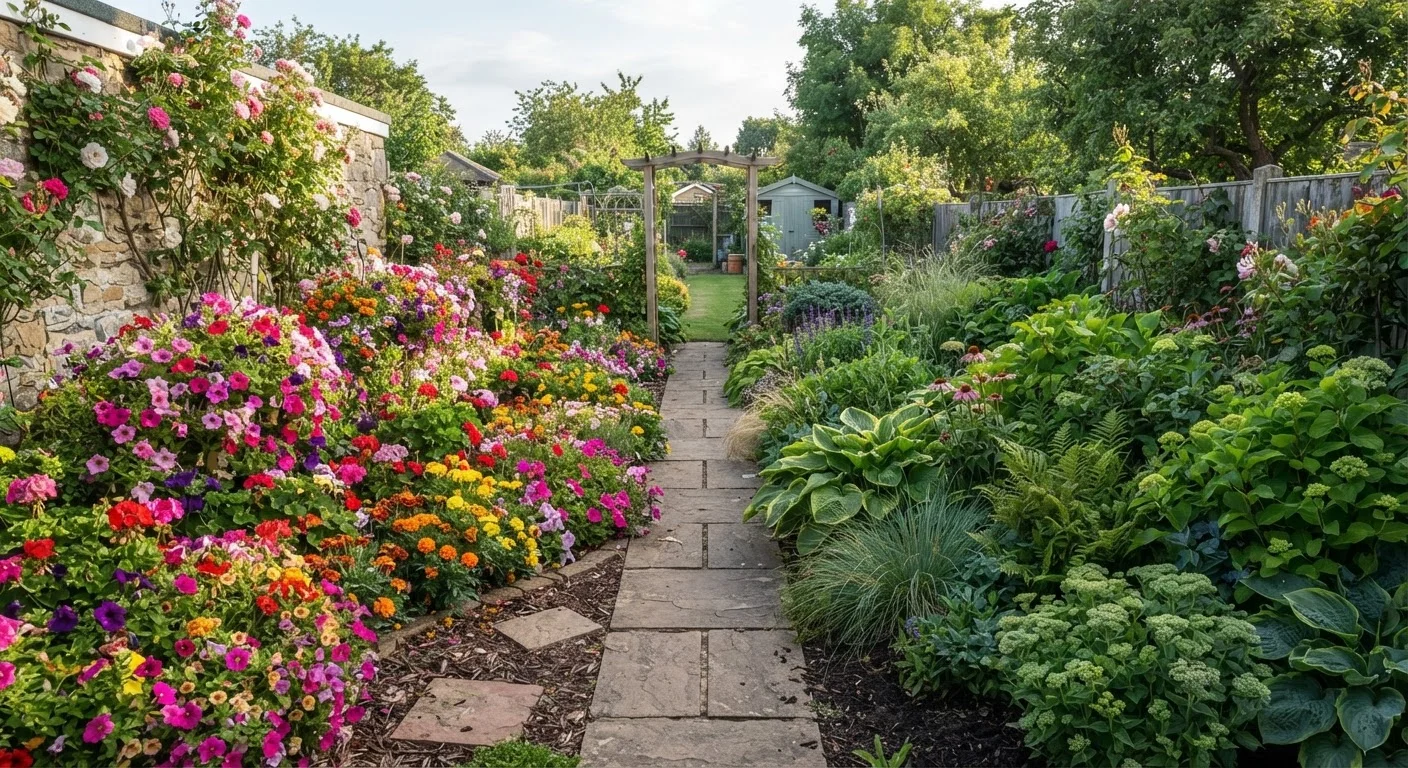
Many experienced gardeners stop thinking of it as an either/or choice. A practical approach: use perennials to create the garden's permanent structure and use annuals to fill in gaps, add seasonal variety, or experiment with color combinations year to year.
A few principles that help:
- Plant perennials first. Establish your backbone - the plants that will return and spread - then layer annuals around them each season.
- Match water needs. Grouping plants with similar watering requirements saves time and supports plant health. Our guide to watering wisely explains how to match your irrigation approach to your plant mix.
- Account for bloom time. Note when each perennial peaks, then select annuals that cover the periods when perennials aren't in flower.
- Start small. A manageable mixed bed teaches you which plants thrive in your specific conditions before you commit to a larger planting.
3-5 years
Typical payback period for perennial investment
Horticultural educators generally note that most perennials require two to three seasons to fully establish, with cost-per-season value improving each year they return and spread.
~6 weeks
Average bloom window for a single perennial variety
University extension programs commonly cite a six-week bloom period as typical for many popular perennials, underscoring the importance of planting for successive flowering.
If the scale of a garden project ever grows beyond what you're comfortable managing - grading, irrigation installation, or major hardscaping to support a new bed - it's worth understanding when outside help makes sense. The same cost-vs.-effort thinking covered in our DIY vs. hiring a contractor guide applies here too.
The content on this site is provided for informational purposes only and should not be considered a substitute for professional advice. While we strive to provide accurate and up-to-date information, we make no guarantees regarding its completeness or accuracy. Always consult a qualified professional for advice specific to your circumstances before making any decisions.